
주요 내용
간단한 답변: Film waste reduction starts with measuring where waste happens — startup, changeover, rejects or setup — then attacking each source with setup discipline and film choice.
- Locate the waste first — startup, changeover, misregistered rejects, over-width film
- Film selection is lever one — right width and specification eliminates constant loss
- Machine setup discipline — tracking, tension and registration settings minimize rejects
- Operators move the number — trained threading and changeover routines cut startup waste
- Savings are calculable — the article shows how to price waste into a savings estimate
Film waste often hides in oversized widths. Calculate the minimum film width your product actually needs — every mm saved is pure margin.
Find your minimum film width →서론
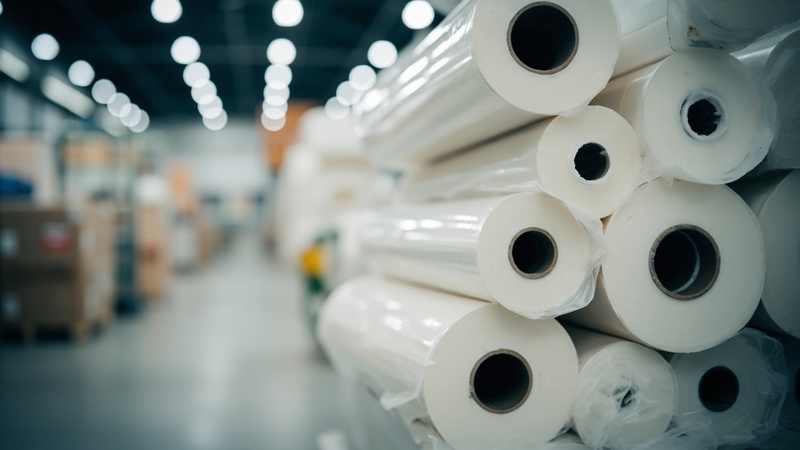
Film is one of the largest consumable costs in 플로우 래핑 operations, typically representing 15-25% of total packaging cost. For a facility running a single flow wrapper at 80 packages per minute, annual film consumption can easily reach six figures. Even a modest waste reduction of 5% translates to a five-figure annual saving—and most facilities have room for improvement far beyond that.
In our field service work on packaging lines, the average flow wrapping operation wastes between 8-15% of its film material. The best-performing facilities, however, maintain waste below 3% through systematic optimization. The gap between average and best-in-class represents significant untapped savings.
This article provides actionable strategies for reducing film waste across every stage of your flow wrapping process—from film selection and machine setup to operator practices and maintenance routines. These recommendations are based on real-world results from facilities we have helped optimize.
핵심 요점: Most film waste is caused by a combination of suboptimal machine settings, incorrect film specifications, and preventable operational errors. Addressing these systematically can reduce waste by 10-20% without compromising package quality.
Where Film Waste Occurs
The Five Sources of Film Waste
Before you can reduce waste, you need to understand where it comes from. Film waste in flow wrapper operations typically falls into five categories:
| Waste Source | Typical Contribution | Root Cause | Difficulty to Fix |
|---|---|---|---|
| Startup and changeover waste | 25-35% | Film threading, temperature stabilization, parameter adjustment | 낮음 |
| Product rejects | 20-30% | Misaligned products, seal failures, incorrect cuts | 중간 |
| Film end waste (tails) | 15-20% | Unusable film remaining on core, roll change procedures | 낮음 |
| Registration/print waste | 10-15% | Print mark detection errors, registration drift | 중간 |
| Film defects | 5-10% | Supplier quality issues, storage damage, handling damage | 낮음 |
Measuring Your Waste
You cannot improve what you do not measure. Establish a film waste tracking system:
- Weigh all waste film at the end of each shift (separate by category if possible)
- Track waste per roll (total film used vs. usable packages produced)
- Calculate waste percentage: (waste weight ÷ total film weight) × 100
- Record waste by product type to identify which products generate the most waste
- Set waste reduction targets with monthly tracking
A simple spreadsheet is sufficient to start. The goal is to establish a baseline and then measure improvement.
How to Optimise Film Selection?
Right-Sizing Your Film Thickness
One of the most impactful yet overlooked opportunities is using the correct film thickness. Many facilities use thicker film than necessary because “that is what we have always used” or because a previous supplier recommended it.
Film technology has advanced significantly. Modern BOPP films can provide the same barrier and mechanical properties at 15-20% less thickness compared to films available five years ago.
Film selection optimisation process:
- Document your minimum requirements for each product:
- Mechanical strength (puncture resistance, tear strength)
- Barrier properties (moisture, oxygen, light)
- Seal strength requirements
- Appearance requirements (gloss, clarity, printability)
- Shelf life requirements
- Request film samples from multiple suppliers at different thicknesses
- Run production trials measuring:
- Machine runnability (web breaks, tracking stability)
- Seal quality (peel strength per ASTM F88)
- Package appearance (wrinkles, bubbles, distortion)
- Drop test performance (ISTA 1A or 2A)
- Calculate cost per package (not cost per kilogram) to make fair comparisons
Real-world example: Worked example: switching from 30μm to 25μm BOPP after testing confirms equivalent seal strength cuts film cost by 16.7%. Applied to your annual film spend, the saving scales directly with it.
Film Width Optimization
Using film that is wider than necessary creates waste in two ways: excess edge trim and more material per package. Calculate the minimum film width required:
Minimum film width = Product height × 2 + Product width + Seal allowance (typically 5-10mm per side) + Lap allowance (typically 10-15mm)
Work with your film supplier to source film in the optimal width. Custom widths may carry a small premium, but the savings from reduced waste typically outweigh the premium within the first few months.
Core Size Considerations
Larger diameter rolls reduce the frequency of roll changes and associated waste. Standard core sizes include 76mm (3 inches) and 152mm (6 inches). While larger cores mean less usable film per roll (due to the minimum unwinding diameter), they also reduce threading waste and downtime. Calculate the optimal balance for your specific production volumes.
How to Optimise Machine Setup
Setup optimizations like these are standard practice on machines such as the JC420 플로우 포장기.
Tension Control Adjustment
Incorrect tension is one of the leading causes of film waste. Too much tension causes:
- Film stretching, resulting in packages that are shorter than specified
- Web breaks, forcing roll changes and re-threading
- Registration marks shifting out of sensor range
Too little tension causes:
- Film wrinkles, leading to seal failures and rejects
- Film weaving, causing crooked seals and uneven cuts
- Accumulation of slack film, which can jam the forming collar
Best practices for tension optimization:
관련 항목: Threading Film on a Flow Wrapper:
- Set tension to the film supplier’s recommended range for your specific film type and thickness
- Verify tension at production speed, not just at startup (tension requirements change with speed)
- Check tension uniformity across the web width using multiple measurement points
- Record optimal tension settings for each film/product combination in your setup database
Path Pack machines feature closed-loop electronic tension control systems using Schneider variable frequency drives, which maintain consistent tension even during acceleration and deceleration phases. This technology alone typically reduces tension-related waste substantially compared to open-loop mechanical tension systems.
관련 항목: Adjusting Film Width and Tension: Fine-Tuning
Temperature Optimization
Running seal temperatures higher than necessary wastes energy and increases the risk of film degradation and burned seals. Running too low results in seal failures and rejects.
Temperature optimization approach:
- Start with the film supplier’s recommended sealing range
- Run peel tests (ASTM F88) at the low, mid, and high end of the range
- Select the lowest temperature that produces consistent seal strength above your minimum specification
- Document the optimal temperature for each film/product combination
A 10°C reduction in seal temperature may not seem significant, but it extends heater element life, reduces energy consumption by approximately 3-5%, and provides a wider safety margin against burned seals.
Cut Length Optimization
Ensure your cut length is set to the minimum required for product protection and appearance. Every extra millimeter of cut length adds material cost across millions of packages.
Audit your cut lengths quarterly:
– Measure actual product dimensions (they may have changed due to supplier variations)
– Verify the minimum margin required for seal integrity and product protection
– Reduce cut length to the minimum viable dimension
– Document the savings per package and project annual impact
A 2mm reduction in cut length on a 200mm package saves 1% in film cost. That 1% repeats on every roll you buy, with no quality compromise.
Reducing Startup and Changeover Waste
Minimizing Startup Waste
Every time a machine starts up from cold, there is a period of instability while temperatures stabilize, film tension adjusts, and the machine reaches steady-state operation. During this period, all produced packages are typically waste.
Strategies to reduce startup waste:
- Pre-heat during changeover: Start heating seal bars during the previous roll changeover so they are at temperature when you are ready to run
- Thread film with the machine stopped (not while running) to avoid producing rejects during threading
- Use a consistent startup sequence that minimizes the number of test packages needed
- Save optimal parameters by product so you do not need to re-tune from scratch each time
With a well-practiced procedure, startup waste can be reduced from 10-15 packages to 3-5 packages per startup.
Streamlining Changeovers
Product changeovers often generate significant waste because operators must adjust multiple parameters. Implementing SMED (Single-Minute Exchange of Die) principles:
- Prepare film rolls and materials before stopping the current run
- Use pre-set parameter recipes stored in the PLC for each product
- Standardize changeover procedures with visual work instructions
- Train operators to perform changeover tasks in parallel where safely possible
- Track changeover time and waste to identify improvement opportunities
Best-in-class facilities achieve changeover times under 15 minutes with fewer than 10 wasted packages per changeover. Average facilities often take 45-60 minutes with 20-30 wasted packages.
What Are the Best Practices for Film Handling and Storage?
Proper Storage Conditions
Film degradation during storage causes waste that is often attributed to machine problems. Proper storage prevents:
- Moisture absorption: Causes sealing problems, especially for BOPP and nylon-based films
- Temperature cycling: Causes condensation, film blocking, and dimensional changes
- UV exposure: Degrades polymers and reduces seal strength
- Physical damage: Crushed rolls, edge damage, and contamination from dust
Storage guidelines:
– Store film in a climate-controlled area (18-25°C, 40-60% relative humidity)
– Store rolls vertically on pallets, never lying flat
– Keep rolls in original packaging until needed
– Follow FIFO (First In, First Out) inventory rotation
– Do not stack more than 4 rolls high
– Keep away from direct sunlight and heat sources
Handling During Roll Changes
Film rolls are easily damaged during handling:
- Use a roll cart or lifting device—never carry rolls by the film edge
- Keep cutting tools away from the roll surface when opening packaging
- Do not drag rolls across the floor
- Protect rolls from dust during transport to the machine
- Clean the film threading path before installing a new roll
Maximizing Roll Usage
Every roll has a minimum unwinding diameter below which the tension control cannot maintain proper web handling. However, many operators change rolls prematurely, leaving significant usable film on the core.
- Know your machine’s minimum roll diameter (check the manual or measure empirically)
- Train operators to run rolls to the minimum diameter rather than changing early for convenience
- Track actual roll yield (packages per roll) to identify if operators are changing too early
- Consider a film splicer for automatic roll changes that minimize tail waste
How Can Operators Reduce Waste?
Training and Awareness
Operators who understand the cost of waste are more motivated to minimize it:
- Display real-time waste metrics at the machine (many modern PLCs can calculate and display waste percentage)
- Share cost data — knowing what 1% of waste costs annually makes the issue tangible
- Conduct monthly waste review meetings with operators to discuss improvement ideas
- Recognize and reward shifts that achieve waste reduction targets
Common Operator Errors
| Error | Waste Impact | Prevention |
|---|---|---|
| Changing rolls too early | 2-5% additional waste | Training, minimum diameter marking |
| Over-tensioning film | Web breaks, stretching | Tension gauges, training |
| Incorrect temperature setting | Seal rejects | Standard setup sheets |
| Not cleaning seal bars | Intermittent seal failures | Scheduled maintenance |
| Rough film threading | Wrinkles, misalignment | Training, practice |
Quality Monitoring During Production
Proactive monitoring catches waste-causing issues before they generate large quantities of rejects:
- Inspect seal quality every 15-30 minutes (visual inspection of seal appearance)
- Run periodic peel tests (every 2-4 hours or at roll change)
- Monitor package dimensions to detect cut length drift
- Watch for registration drift (printed packages only)
- Track reject patterns to identify recurring issues
What Maintenance Practices Prevent Waste?
Preventive Maintenance for Waste Reduction
Several maintenance tasks directly impact film waste:
| Maintenance Task | Waste Prevented | 주파수 |
|---|---|---|
| Clean seal bars | Burned seals, seal failures | Daily |
| Check seal bar flatness | Uneven seals, partial seals | Monthly |
| Inspect and clean forming collar | Wrinkles, misalignment | Weekly |
| Verify knife sharpness | Ragged cuts, incomplete cuts | Weekly |
| Check film guide roller alignment | Tracking errors, wrinkles | Monthly |
| Clean photoelectric sensors | Registration errors | Weekly |
| Inspect dancer roll system | Tension fluctuations | Monthly |
| Verify encoder calibration | Cut length drift | Quarterly |
When to Consider Equipment Upgrades
If your machine consistently generates waste above 5% despite optimized procedures and maintenance, it may be time to evaluate equipment upgrades:
- Modern tension control systems (closed-loop electronic vs. mechanical friction)
- Servo-driven seal systems (precise temperature and pressure control)
- Automatic registration systems (vs. manual adjustment)
- Film splicing equipment (reducing roll change waste)
The ROI on such upgrades is often compelling—a 3% waste reduction typically pays for the equipment within 12-18 months.
Calculating Your Savings Potential
Waste Reduction Calculator
Use this framework to estimate your savings potential:
- Current annual film spend: $__
- Current waste percentage: _%
- Current waste cost: (1 × 2) = $__
- Target waste percentage: _% (industry best practice: 2-3%)
- Potential savings: (1 × (2 – 4)) = $__
Example calculation:
– Annual film spend: your own annual figure
– Current waste: 10%
– Target waste: 3%
– Potential annual savings: 7% of annual film spend
Prioritizing Your Actions
Rank your waste reduction opportunities by effort vs. impact:
| Action | Estimated Impact | Implementation Effort | Priority |
|---|---|---|---|
| Optimize tension settings | 2-4% waste reduction | 낮음 | Immediate |
| Right-size film thickness | 10-15% material cost reduction | 중간 | 높음 |
| Standardize startup procedure | 0.5-1% waste reduction | 낮음 | Immediate |
| Implement waste tracking | Enables all other improvements | 중간 | 높음 |
| Pre-set parameter recipes | 0.5-1% waste reduction per changeover | 낮음 | Immediate |
| Upgrade tension control | 1-3% waste reduction | 높음 | Evaluate ROI |
Every Millimeter of Film Is Money — Calculate Your Minimum
The calculator outputs the exact film width for your product cross-section — no rounding up ‘to be safe.’ Across thousands of bags, the savings are real and recurring.
- ✓ Minimum viable film width
- ✓ Optimal bag length per cycle
- ✓ Density-based mode for powders
- ✓ Free, instant result
자주 묻는 질문
What is considered an acceptable film waste percentage?
For well-managed flow wrapping operations, waste below 3% is considered excellent, 3-5% is good, and anything above 5% indicates significant room for improvement. Some high-precision applications (pharmaceuticals, medical devices) may have slightly higher waste due to tighter quality requirements, but should still target below 5%.
How much can I really save by optimizing film thickness?
It depends on your current situation, but typically 10-20% material cost reduction is achievable. The key is to work with your film supplier to identify thinner films that still meet your performance requirements. Always validate with production trials before switching.
Is automatic film splicing worth the investment?
For operations running multiple shifts or changing rolls more than twice per shift, automatic splicing typically pays for itself within 12-18 months through reduced changeover waste and downtime. For single-shift operations with fewer than 2 roll changes per shift, the ROI may take longer, but the consistency benefit still has value.
How do I convince management to invest in waste reduction?
Frame it in financial terms: “We are currently spending $X on waste that could be reduced to $Y with an investment of $Z, paying back in N months.” Use your waste tracking data to build a compelling business case. Most waste reduction initiatives require minimal capital investment and deliver returns within 6-12 months.
Can film waste be recycled?
Yes, many packaging films can be recycled. Clean, uncontaminated film trim and reject packages can be collected and sold to recycling facilities. Some film manufacturers also offer take-back programs. While recycling revenue is modest, it offsets disposal costs and supports sustainability goals.
결론
Reducing film waste in flow wrapper operations is a systematic process that delivers measurable financial returns. The most effective approach combines proper film selection, optimized machine settings, standardized procedures, operator training, and consistent preventive maintenance.
Key points to implement immediately:
- Track your waste — you cannot improve what you do not measure
- Right-size your film — thickness and width optimization often yield the largest savings
- Optimize tension and temperature — these are the two most impactful machine settings
- Standardize startup and changeover — consistent procedures reduce variability and waste
- Maintain your equipment — preventive maintenance prevents waste-causing failures
Path Pack machines are engineered with features that minimize film waste, including closed-loop electronic tension control, servo-driven seal systems, and pre-set parameter recipes for rapid changeovers. Combined with our complete operator training program, these features help our customers achieve waste levels consistently below 3%.
If you would like a detailed assessment of your current film waste and recommendations for improvement, our application engineers are ready to help. Contact Path Pack to schedule a consultation.
Path Pack 기술팀 제공



 English
 Spanish
 French
 German
 Korean
 Russian
 Italian
 Arabic